The Psychology
Behind Q-Study
See the idea. Understand the meaning.
Learning brings together attention, imagination, reasoning and memory. Meaningful pictures paired with words help learners connect new ideas with what they already know.
Picture → Understand
See a word, story or mathematical idea come to life.
Practice → Remember
Answer questions and revisit mistakes over time.
Reflection → Grow
Think about what you learn and how to apply it.
Q-Study connects pictures, practice and reflection—building Knowledge, Skill and Character.
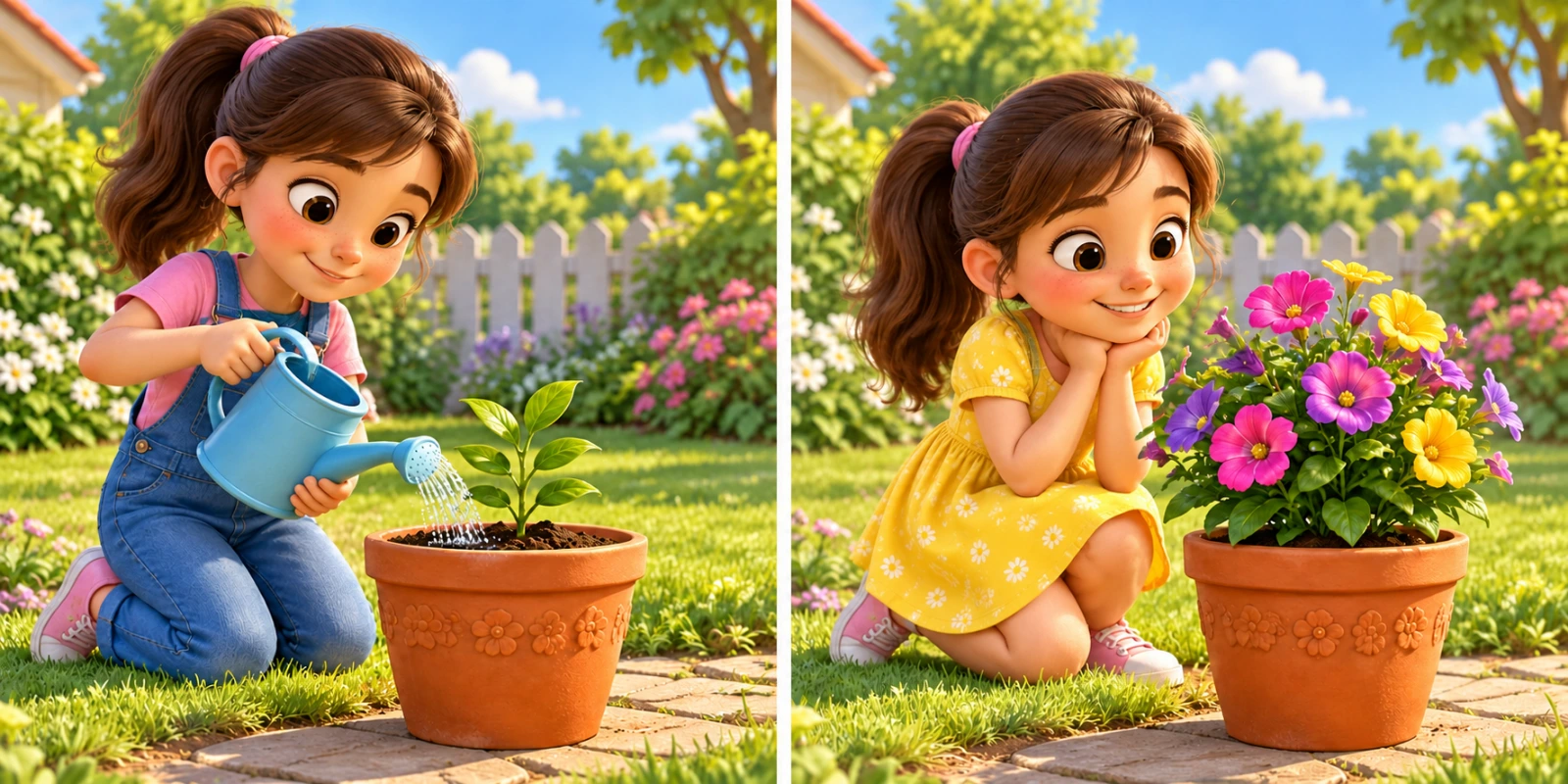
The girl watered her plant every day, and finally it bloomed. The beautiful flowers are the o_______ of her hard work.
Answer: Outcome
A big word.
A clear picture.
The picture connects the girl’s hard work with the flowers that finally bloom—making the meaning of “outcome” easier to understand and remember.
Even if we introduce this word at Levels 7–10, a Level 2 learner can understand the idea through a meaningful picture.

Amanda is struggling with t_____ after losing her beloved puppy.
Answer: Trauma
A picture shows a scene.
Context reveals the meaning.
A woman in a hospital bed might suggest an accident, an injury or an illness. The hospital scene alone does not explain her emotional pain.
The missing-puppy poster, Amanda’s distressed expression and the same blue leash in both scenes connect her suffering to the loss of her beloved puppy. Paired with the sentence, these details help explain the emotional meaning of “trauma.”
Q-Study connects pictures with context—helping learners understand the meaning rather than simply guess the word.
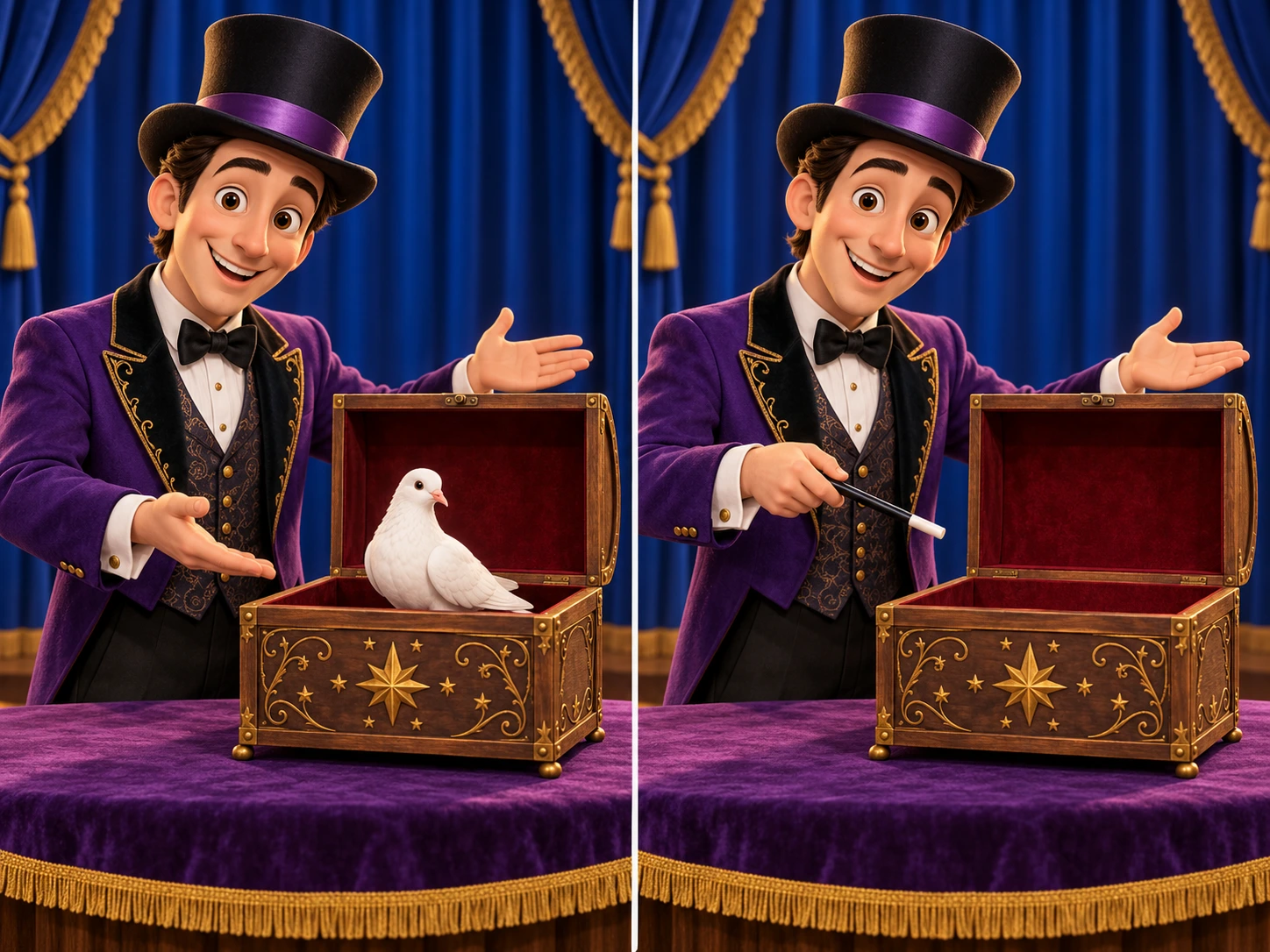
The magician makes the pigeon d_______ from the box.
Answer: Disappear
Show the change.
Make the meaning clear.
A boy’s cat disappearing from a scene might mean it simply walked away or hid. Here, the pigeon is visible inside the box first; then the same box is shown empty. The magician directs attention to the change—helping learners connect “disappear” with becoming no longer visible.
Q-Study uses clear visual comparisons to connect a word with the change it describes.
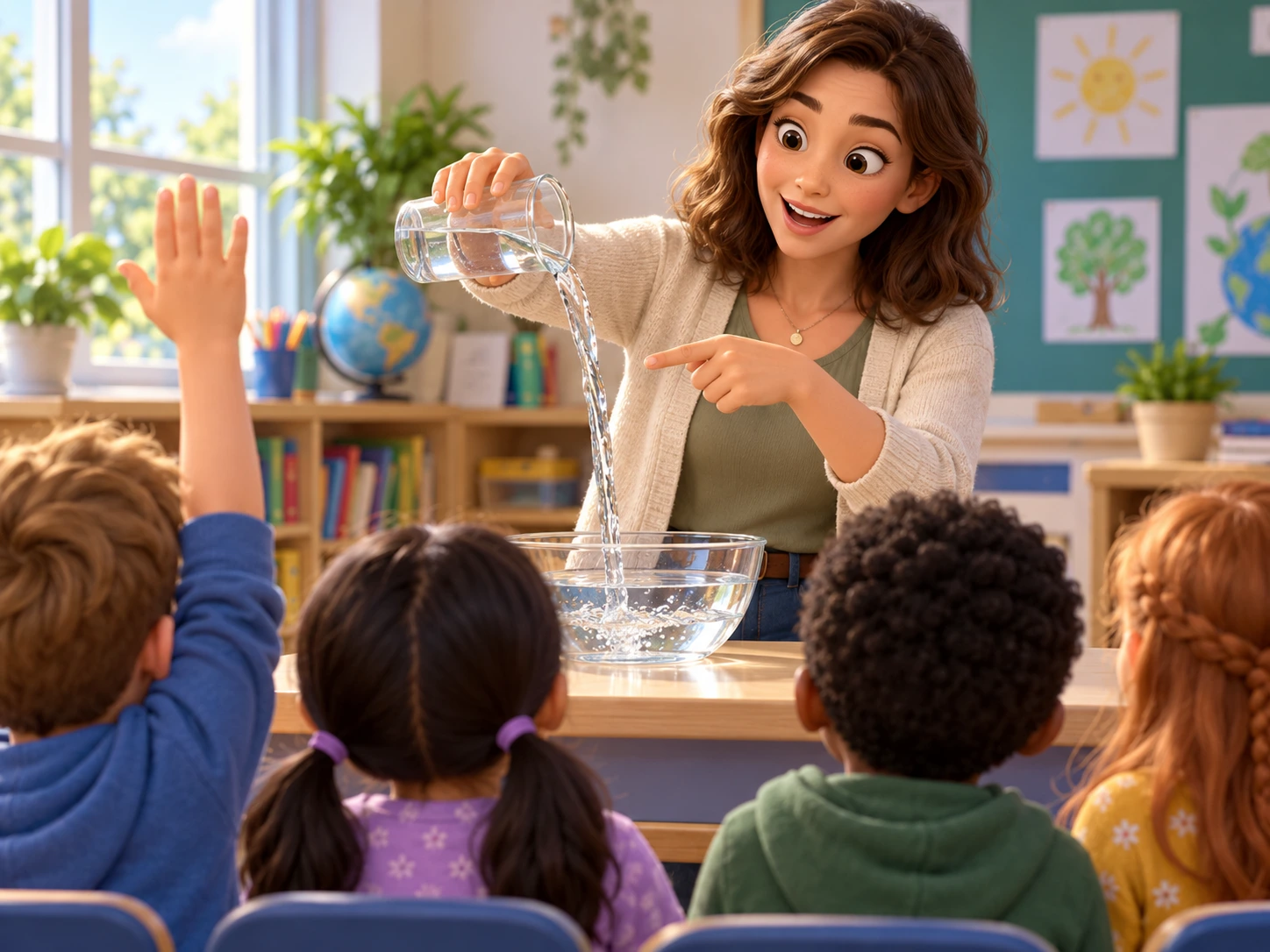
The teacher asks, “What is being poured?”
The students reply: Water
Direct attention.
Connect the word.
The teacher pours water from a glass and points to the stream. “What is being poured?” she asks. “Water,” the students reply.
The action, the pointing gesture and the spoken word work together—helping learners connect “water” with what they can see.
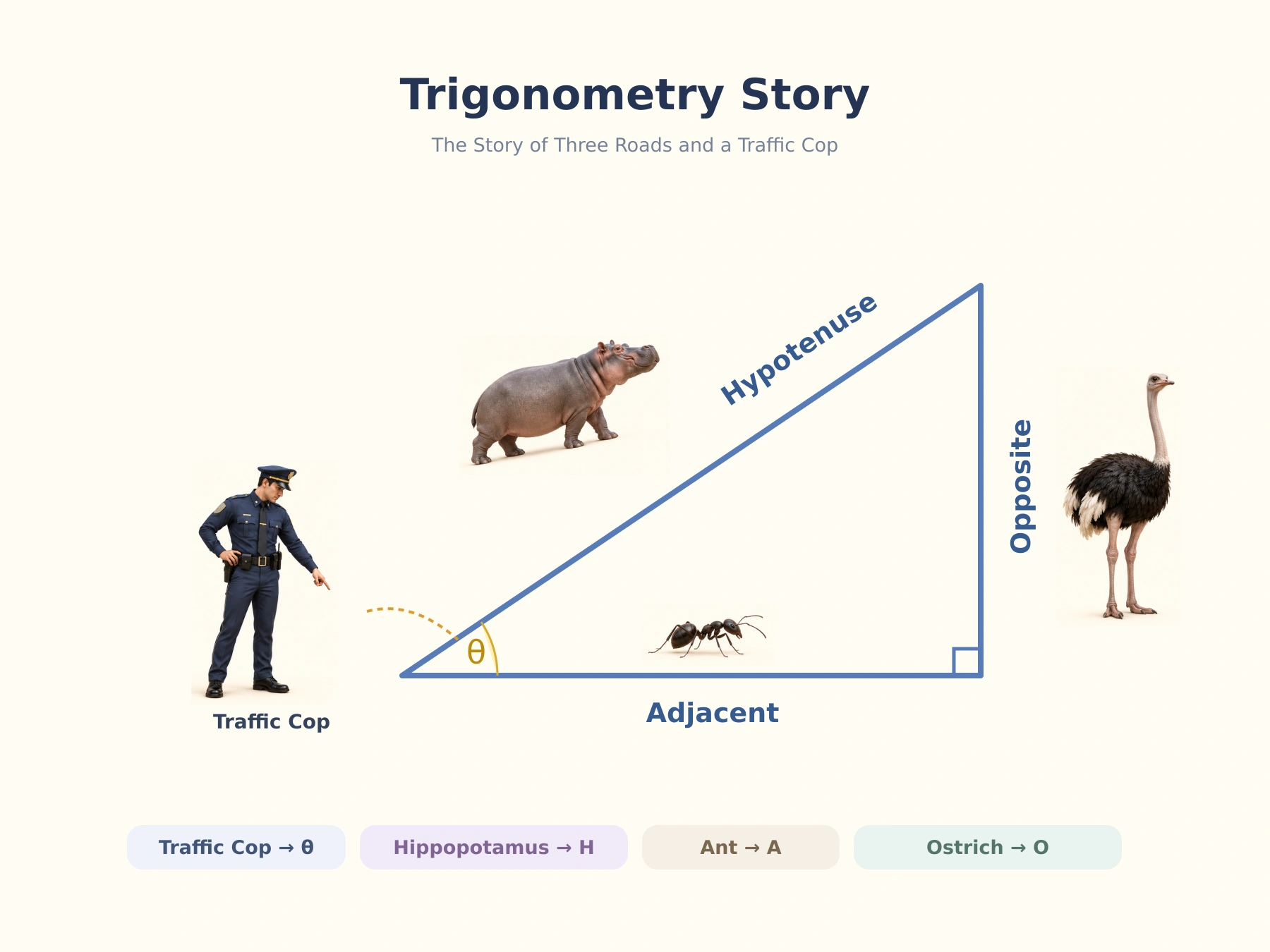
Trigonometry Story
The Story of Three Roads and a Traffic Cop
Understand the idea.
Let the story guide you.
Mathematics becomes meaningful when students understand how and why things work.
Here, a traffic cop and three familiar animals turn an unfamiliar triangle into a memorable story. The characters help students recognise the Hypotenuse, Adjacent and Opposite sides in relation to angle θ.
The story gives them a starting point. Exploring the relationships between the sides builds mathematical understanding.
Q-Study connects pictures, stories and reasoning—helping students understand what they learn and remember it with meaning.
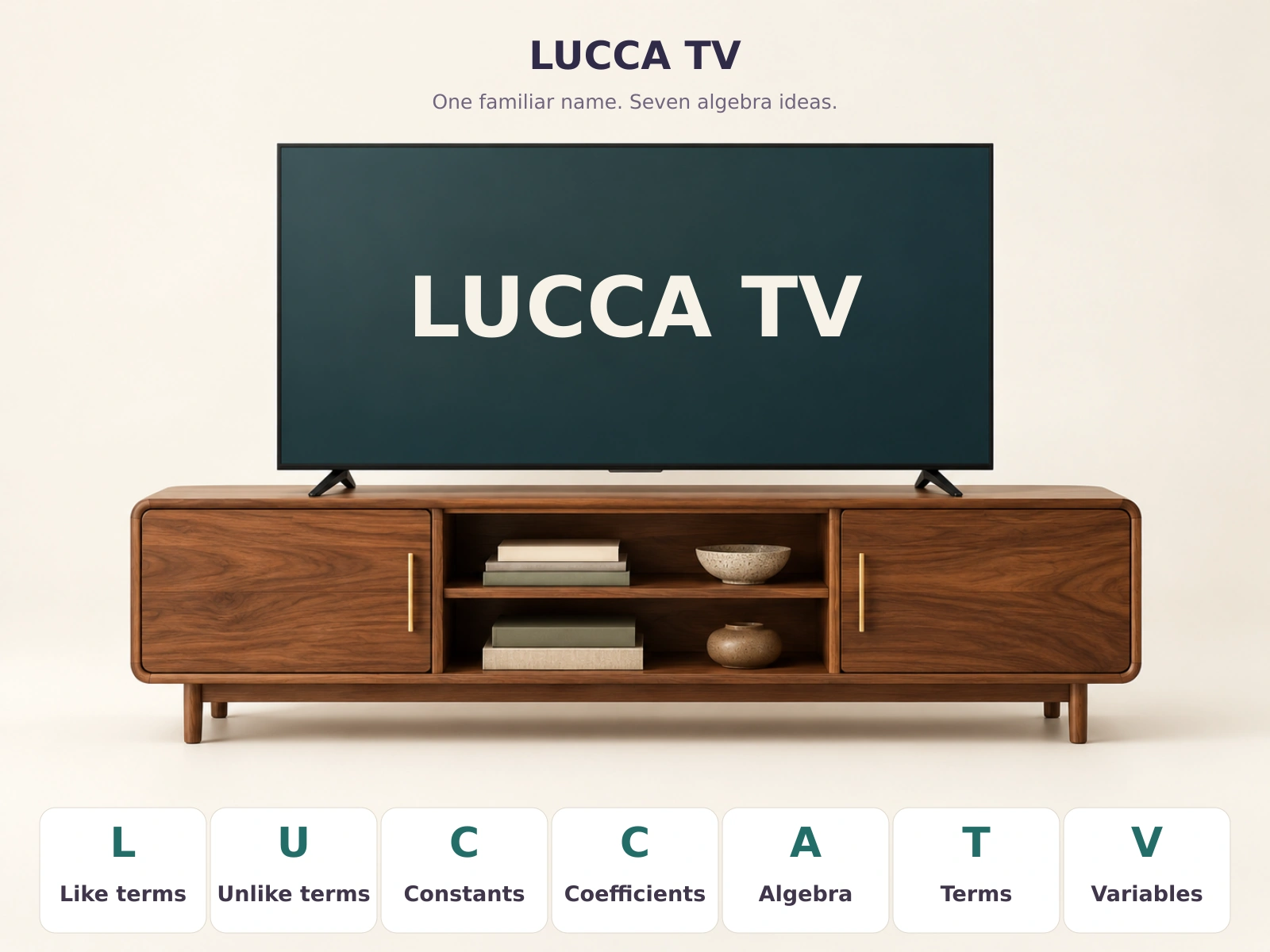
LUCCA TV
A memory cue for seven algebra ideas.
A familiar picture.
A place to begin.
Seven unfamiliar names can feel like a lot to take in. The phrase LUCCA TV, paired with a familiar television unit, gives learners a simple way to recall them.
Like terms, Unlike terms, Constants, Coefficients, Algebra, Terms and Variables.
The name is a memory cue. Understanding comes from exploring what each idea means and how to use it.
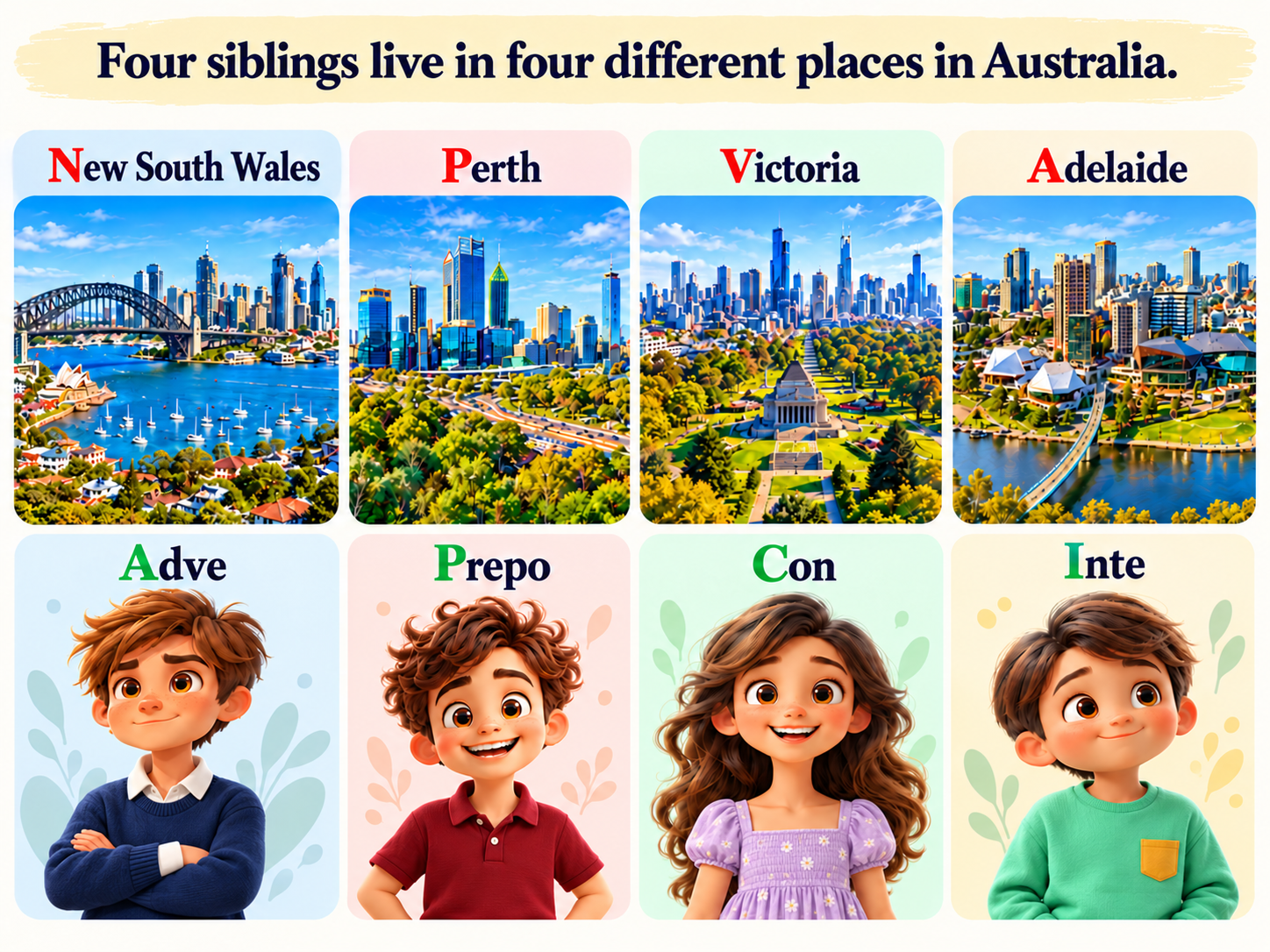
Meet Adve, Prepo, Con and Inte.
Tap the picture to read it at full size.
Four siblings.
A memorable beginning.
Meet Adve, Prepo, Con and Inte in New South Wales, Perth, Victoria and Adelaide. Their faces, names and places give learners a familiar starting point for eight new grammar terms.
The picture introduces the cast. Next, we connect the names to parts of speech, then follow the characters into sentences and stories.
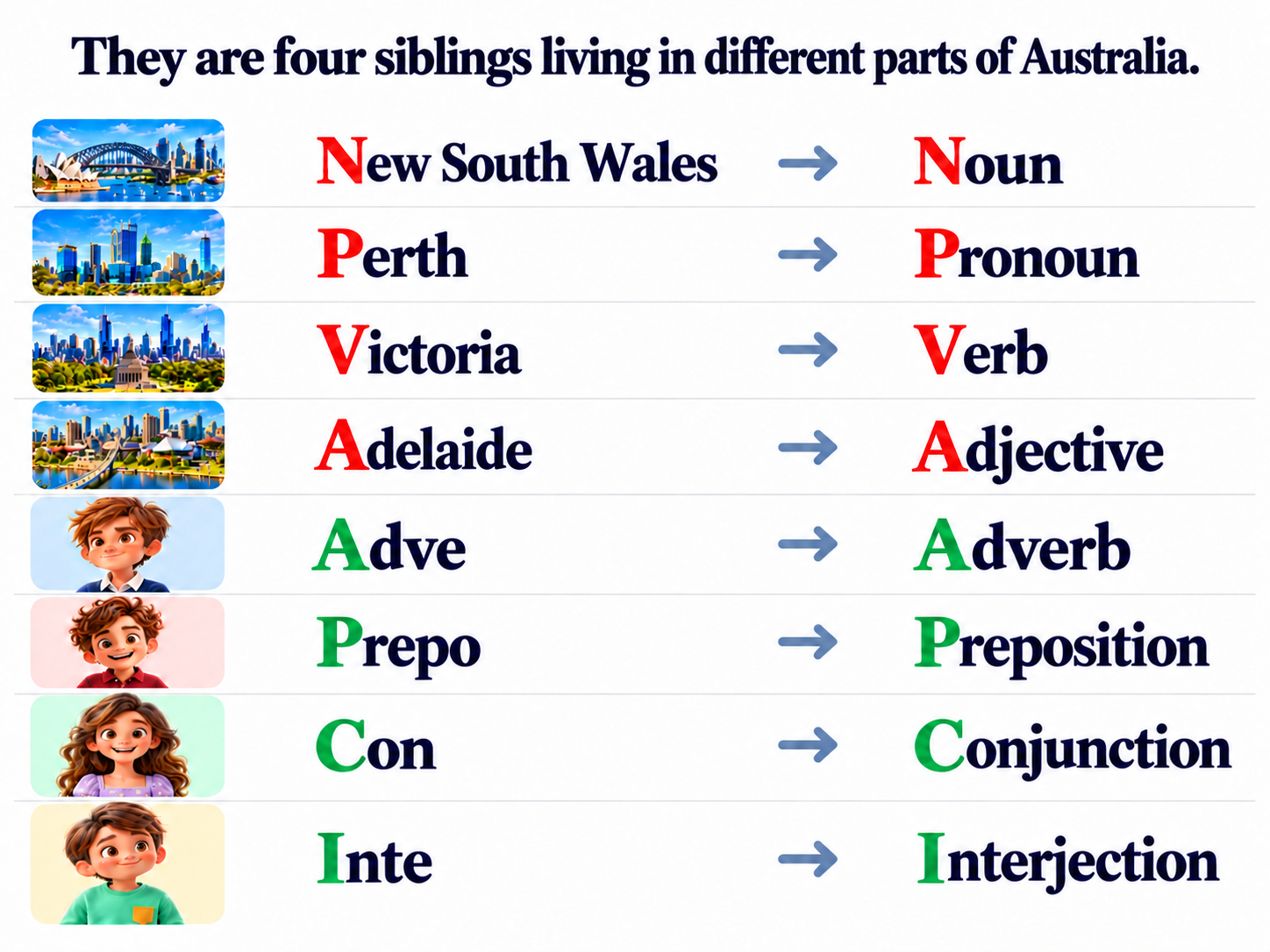
From places and characters to parts of speech.
Tap the picture to read it at full size.
Eight connections.
A way to remember.
The four places cue Noun, Pronoun, Verb and Adjective. The siblings’ names cue Adverb, Preposition, Conjunction and Interjection.
These are memory links, not definitions. Con reminds us of “conjunction”, but her name is a proper noun when it names her in a sentence. What matters next is the job each word does.
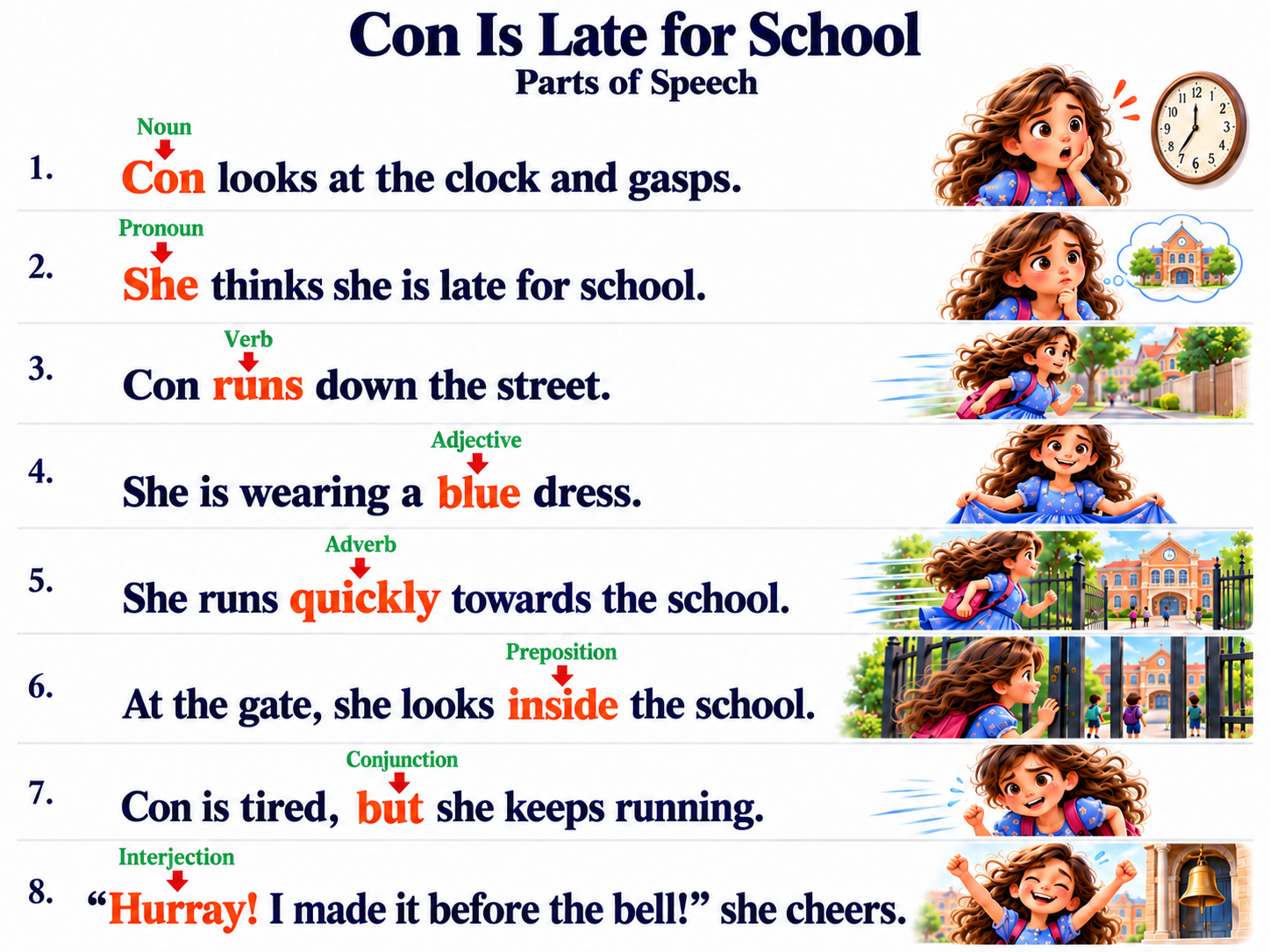
Con Is Late for School
Tap the picture to read it at full size.
Follow the story.
Notice what words do.
As Con hurries to school, the highlighted words show grammar in action: she refers to Con, runs tells us what she does, and quickly describes how she runs.
Here, blue describes her dress. In another story, “Con is tall” can introduce a different adjective: tall describes Con. The word changes; the describing role remains.
Across several stories, learners meet new examples, compare their roles and practise recognising parts of speech in context.
Think about what makes sense.
Tap the picture to read it at full size.
Pause. Compare.
Choose with a reason.
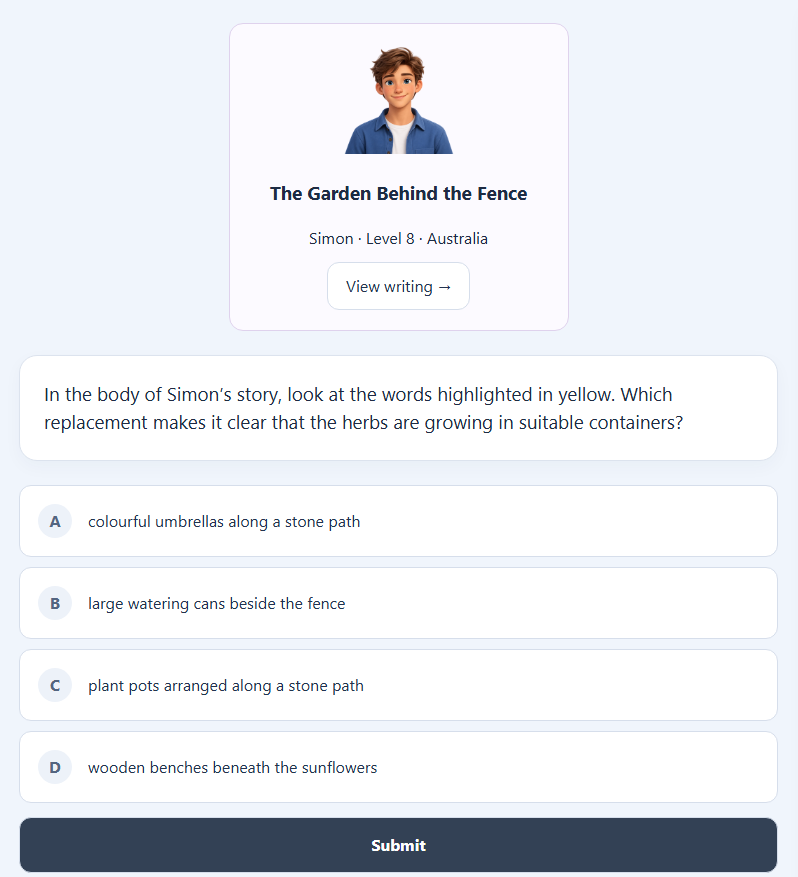
A focused question invites learners to compare possible changes to a story. Which words make sense here—and why?
In this example, plant pots are suitable containers for herbs. Choosing a replacement asks the learner to connect language with the scene, rather than recognise a word in isolation.
Read the story. Notice the detail.
Tap the picture to read it at full size.
Look beyond a sentence.
Follow the meaning.
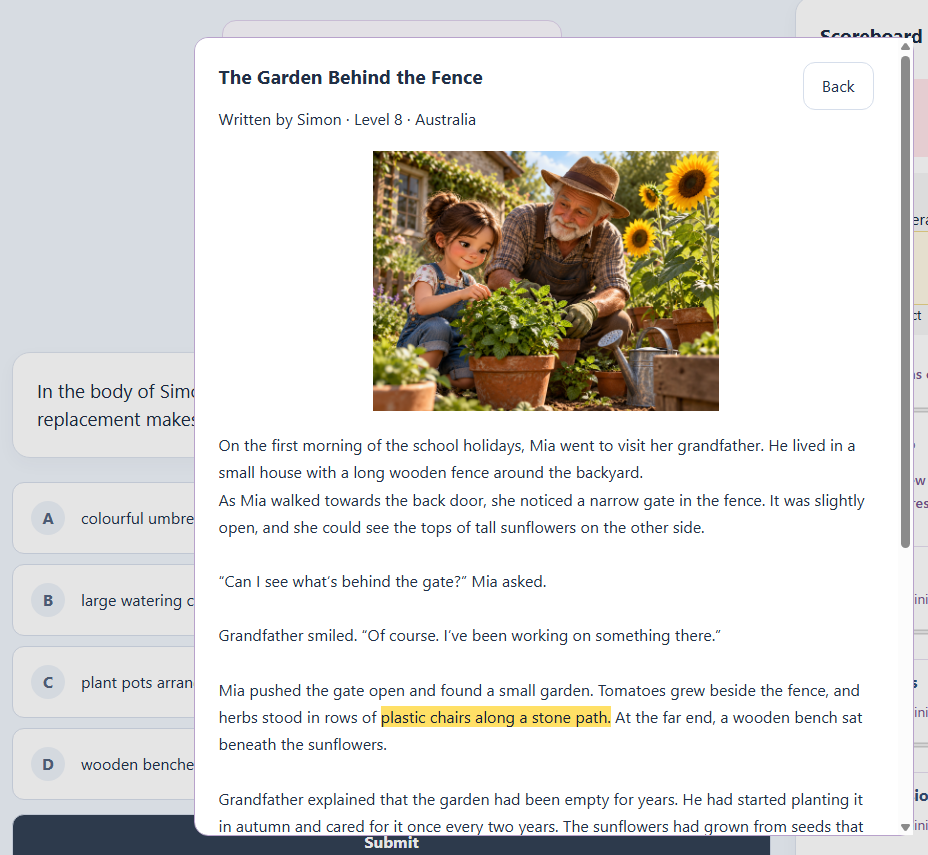
Opening the sample story reveals the garden, the characters and the surrounding sentences. The highlighted phrase gives learners a specific detail to examine.
Reading it in context helps them ask: Does this detail fit the scene? They can then explain how a small revision makes the writing clearer and more believable.
The sample becomes something to question, discuss and improve.
A beginning, a middle and an ending.
Tap the picture to read it at full size.
From noticing ideas
to writing your own.
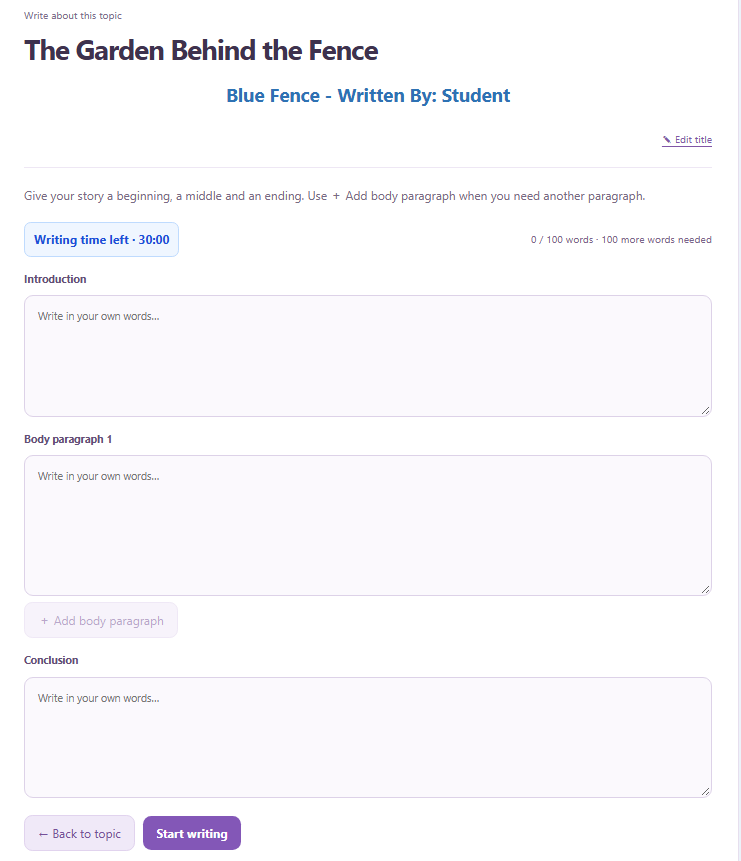
Now learners build their own story. Separate spaces for an introduction, body and conclusion offer a starting structure, with room to add another body paragraph as their ideas develop.
They decide how to introduce the scene, connect events and bring the story to a meaningful close—using their own words.
Q-Study connects careful reading, thoughtful revision and creative practice.